
FRIENDLY REMINDER PROUDLY PRESENTS
BORN
RUFFIANS
„Not so much a band as a cult makingmusic that’s truly psychedelic“ NME
„Delirious funky, irresistibly contagious“ CLASHED
„sense of intense rhythms andexpansive, explorative sounds" POPMATTERS
ABOUT THE ARTIST
In the lead-up to the release of Born Ruffians’ ninth album, Beauty’s Pride, the band’s singer/guitarist Luke Lalonde received a glowing endorsement from a notoriously hard-to-please critic: Luke Lalonde. “Whenever we finish a record, if I don't hate it, I'm usually just over it and I don't want to hear it again for a while,” he says. “Whereas when I put this record on, I actually think, ‘I like this! I think I might be a fan of this record!’” We should take his opinion to heart—after all, no one’s in a better position to evaluate a Born Ruffians record than the guy who’s served as their principal songwriter for over 20 years now. When Lalonde, bassist Mitch DeRosier, and drummer Steve Hamelin left their hometown of Midland, Ontario in 2004 to make a go of it in Toronto’s vibrant post-Y2K indie-rock scene, the world was a very different place: “digital music” amounted to mislabeled files illicitly procured on Limewire after a five-hour download, mp3 blogs held kingmaking power over the underground, and social-media interaction was limited to checking out your friend’s band’s lo-fi demos on their janky MySpace page. Since then, Born Ruffians have evolved as dramatically as the industry around them, gradually shifting from the precocious ‘n’ ferocious racket of their 2006 self-titled EP to the streamlined, studio-savvy indie-pop of 2013’s Birthmarks to the rousing E Street-inspired anthems of 2020’s JUICE. The moment you drop the needle (or cursor) on Beauty’s Pride, it’s clear Born Ruffians have made good on a five-year-old promise to rip it up and start again. Just as the introductory synth fanfare of Kid A’s “Everything In Its Right Place” instantly demarcated Radiohead’s career into before/after phases, the opening of Beauty’s Pride presents an equally disorienting about-face, with a flurry of fidgety beats and beaming electronics whisking you into the euphoric strobe-lit banger “Mean Time.” Says Lalonde: “I just wanted to write something dancey, something completely out of the mould of the band. I was not writing it as a Born Ruffians song, that's for sure.” Recording sessions for Beauty’s Pride began in the summer 2023, just as Lalonde was about to start another side project—i.e., becoming a dad. Now, it’d be a stretch to say Beauty’s Pride is a concept album about fatherhood—there are no songs here about the horrors of trying to change a diaper without a pack of wet wipes handy, or the meltdowns triggered by a lost stuffy. However, the album is rife with philosophical musings about the cyclical nature of life, and the need to make every second here count. “With ‘Mean Time,’ I was reading Nabokov’s autobiography, Speak Memory, and I thought it was really beautiful,” Lalonde says. “At the very beginning, he writes about time, and how your life is essentially a brief crack of light between two eternities of darkness, and how we're sort of existing inside of these bookends. Maybe that idea used to be sort of panic-inducing to me—I’ve had a fear of death since I was a really little kid. But, lately I haven’t been feeling that way. I just think there’s something more beautiful about that briefness of life, and how we don't really know what's in the before and after.” Recorded with returning Birthmarks producer Roger Leavens, and featuring mixing assistance from Gus Van Go (Metric, The Beaches), Beauty’s Pride is a studio creation through and through. While it was a bit of a shock to see a scrappy indie-rock band like Born Ruffians get signed by UK electronic imprint Warp back in 2006, the tranquil textures and electronically manipulated vocals of “All My Life” would fit right in with its roster of ambient soundscapers today. Other tracks savvily reanimate classic alt-rock styles for these totally-wired times: “Supersonic Man” imagines Oasis writing songs that sound like 2067 instead of 1967; “Do” is a ‘90s Weezer jam taken over by Daft Punk’s robots; and “Athena” harkens back to that early ‘80s moment when anti-social post-punk bands started writing socially conscious pop songs with exotic and excitable keyboard melodies. (Lalonde describes it as a track that “dips into capitalist dystopia for a moment, but in a fun, danceable way.”) Even seemingly straight-forward motorik indie-pop cruisers like “What a Ride” and “To Be Seen” are threaded with swirling synth effects and processed vocal filters that heighten the overall sense of disorientation and delirium. But the album’s shapeshifting productions and stylistic detours are anchored by a certain thematic consistency—however accidental. The title of Beauty’s Pride may hint at the physical and emotional bonds between parents and their offspring—a theory reinforced by a brief cooing cameo from the littlest Lalonde on the closing title track—the phrase has actually been bouncing around Lalonde’s head for a few years. Its origins date back to a trip Luke took to India to visit his wife, who was doing research on her Ph.D at a dairy-farm facility over there. Upon borrowing a friend’s glittery purple child-size bike for a leisurely day ride, he noticed the words “Beauty’s Pride” emblazoned on the frame in big Disneyesque letters. Luke later discovered that the bike he borrowed that day didn’t actually belong to his friend—he had accidentally taken somebody else’s wheels. But his brief tenure as India’s most unwitting bike thief would fortuitously plant the seed for the album we have today. “Where we’re normally scrambling at the 11th hour to find a title amongst the lyrics, something that sums up the feeling of the collection of songs we’ve assembled, this time we worked in reverse,” Luke says, “with the large, sparkling, purple light of ‘Beauty’s Pride’ guiding us all the way. But as much as it was influenced by the birth of his child, Beauty’s Pride also signifies the rebirth of his band. Perhaps the biggest surprise on the album comes in the form of “Can We Go Now,” a chillwavy psych-pop strut—coloured with Stereolab bleeps and vintage-videogame bloops—written and sung by Maddy Wilde, who officially joined the band in 2022. That makes it the first Born Ruffians track ever to originate from somewhere outside of Luke Lalonde’s brain—and, as such, completely blows open the possibilities of what a Born Ruffians song can be. As Lalonde puts it, “Her fingerprints are all over this album, and I think it's a great new ingredient in the Born Ruffians mix.” So when Lalonde tells you that he’s really enjoying his band’s new album, he’s not being cocky or cheeky. He’s simply savouring a rejuvenating sensation that few artists get to experience as they enter their third decade of music-making. Pretty much all of the bands Born Ruffians came up with in the mid-2000s Toronto scene are long gone—Magneta Lane, Henri Faberge & The Adorables, and Wilde’s old band Spiral Beach, to name just a few. And last year, even their most successful peers—Tokyo Police Club—called it a day after a 20-year run. Born Ruffians have arrived at the point where a lot of bands give in to the nostalgic lure of album-anniversary tours, start contemplating the casino/fairground circuit, or call it quits. But the beauty of Beauty’s Pride lies in its refusal to accept any of those predestined fates. Rather, it presents Born Ruffians as the rare veteran act that can still make you feel like you’re discovering your new favourite band.
Im Vorfeld der Veröffentlichung des neunten Albums der Born Ruffians, Beauty’s Pride, erhielt Sänger und Gitarrist Luke Lalonde ein überschwängliches Lob von einem Kritiker, der als notorisch schwer zufriedenzustellen gilt: Luke Lalonde selbst. „Immer wenn wir ein Album fertigstellen und ich es nicht hasse, bin ich meistens einfach nur drüber hinweg und will es eine Zeit lang nicht mehr hören“, sagt er. „Aber wenn ich diese Platte auflege, denke ich tatsächlich: Ich mag das! Ich glaube, ich bin Fan dieser Platte!“ Wir sollten seine Meinung ernst nehmen – schließlich ist niemand besser geeignet, ein Born-Ruffians-Album zu beurteilen als der Mann, der seit über 20 Jahren ihr Hauptsongwriter ist. Als Lalonde, Bassist Mitch DeRosier und Schlagzeuger Steve Hamelin 2004 ihre Heimatstadt Midland in Ontario verließen, um ihr Glück in der pulsierenden Post-Y2K-Indie-Rock-Szene Torontos zu versuchen, war die Welt eine ganz andere: „Digitale Musik“ bestand aus falsch benannten Dateien, die man sich nach fünfstündigen Downloads illegal über Limewire besorgte, MP3-Blogs hatten königsmacherische Macht im Underground, und soziale Interaktion beschränkte sich darauf, die Lo-Fi-Demos der Band von Freund*innen auf deren klapprigen MySpace-Seiten anzuhören. Seitdem haben sich Born Ruffians ebenso drastisch weiterentwickelt wie die Musikindustrie um sie herum – von dem frühreifen, ungestümen Krach ihrer selbstbetitelten EP von 2006 über den geschliffenen, studioaffinen Indie-Pop von Birthmarks (2013) bis hin zu den mitreißenden, vom E-Street-Sound inspirierten Hymnen auf JUICE (2020). Sobald man auf Beauty’s Pride die Nadel (oder den Cursor) senkt, wird klar, dass Born Ruffians ein fünf Jahre altes Versprechen eingelöst haben: alles niederzureißen und neu anzufangen. So wie das einleitende Synth-Fanfarenmotiv von Radioheads „Everything In Its Right Place“ auf Kid A die Karriere der Band augenblicklich in ein Davor und Danach teilte, markiert auch der Auftakt von Beauty’s Pride eine ähnlich irritierende Kehrtwende. Ein Wirbel aus nervösen Beats und strahlender Elektronik zieht einen direkt in den euphorischen, strobo-getränkten Banger „Mean Time“. Lalonde dazu: „Ich wollte einfach etwas Tanzbares schreiben, etwas völlig außerhalb der gewohnten Bandform. Ich habe das ganz sicher nicht als Born-Ruffians-Song geschrieben.“ Die Aufnahmen zu Beauty’s Pride begannen im Sommer 2023 – just zu dem Zeitpunkt, als Lalonde ein weiteres Nebenprojekt startete: Vater zu werden. Nun wäre es übertrieben zu sagen, Beauty’s Pride sei ein Konzeptalbum über Vaterschaft – es gibt hier keine Songs über die Schrecken des Windelwechsels ohne Feuchttücher oder über Wutanfälle wegen eines verlorenen Kuscheltiers. Doch das Album ist durchzogen von philosophischen Gedanken über die Zyklen des Lebens und die Notwendigkeit, jede einzelne Sekunde zu nutzen. „Bei ‚Mean Time‘ habe ich Nabokovs Autobiografie Speak, Memory gelesen, und ich fand sie unglaublich schön“, erzählt Lalonde. „Gleich zu Beginn schreibt er über Zeit und darüber, dass das Leben im Grunde nur ein kurzer Lichtspalt zwischen zwei Ewigkeiten der Dunkelheit ist – dass wir gewissermaßen zwischen diesen Buchstützen existieren. Früher war diese Idee für mich vielleicht panikauslösend – ich habe seit meiner Kindheit Angst vor dem Tod. Aber in letzter Zeit empfinde ich das nicht mehr so. Ich finde eher, dass in dieser Kürze des Lebens etwas Schönes liegt und darin, dass wir nicht wirklich wissen, was davor und danach kommt.“ Aufgenommen mit dem zurückkehrenden Birthmarks-Produzenten Roger Leavens und mit Mixing-Unterstützung von Gus Van Go (Metric, The Beaches), ist Beauty’s Pride ein durch und durch im Studio entstandenes Album. Während es 2006 noch überraschend war, dass eine raue Indie-Rock-Band wie Born Ruffians beim britischen Elektronik-Label Warp unterschrieb, würden die ruhigen Texturen und elektronisch verfremdeten Vocals von „All My Life“ heute mühelos in dessen Ambient-Katalog passen. Andere Songs beleben klassische Alternative-Rock-Stile für komplett durchdigitalisierte Zeiten neu: „Supersonic Man“ stellt sich vor, Oasis würden Songs schreiben, die nach 2067 statt nach 1967 klingen; „Do“ ist ein 90er-Weezer-Jam, der von Daft Punks Robotern übernommen wurde; und „Athena“ erinnert an jenen frühen 80er-Moment, als introvertierte Post-Punk-Bands begannen, gesellschaftsbewusste Popsongs mit exotischen, aufgeregten Keyboard-Melodien zu schreiben. (Lalonde beschreibt den Song als einen Track, der „für einen Moment in eine kapitalistische Dystopie eintaucht – aber auf eine lustige, tanzbare Art“.) Selbst scheinbar geradlinige, motorische Indie-Pop-Gleiter wie „What a Ride“ und „To Be Seen“ sind durchzogen von wirbelnden Synth-Effekten und bearbeiteten Gesangsfiltern, die das allgemeine Gefühl von Desorientierung und Delirium noch verstärken. Doch bei all den stilistischen Wendungen und wandelbaren Produktionen bleibt das Album – vielleicht unbeabsichtigt – thematisch bemerkenswert geschlossen. Der Titel Beauty’s Pride mag auf die körperlichen und emotionalen Bande zwischen Eltern und ihren Kindern hindeuten – eine Theorie, die durch einen kurzen gurrenden Gastauftritt des jüngsten Lalonde auf dem abschließenden Titelsong gestützt wird. Tatsächlich aber spukt der Ausdruck schon seit einigen Jahren in Lukes Kopf herum. Seinen Ursprung hat er in einer Reise nach Indien, wo Luke seine Frau besuchte, die dort für ihre Promotion auf einer Milchfarm-Forschungseinrichtung arbeitete. Als er sich für eine entspannte Tagesfahrt ein glitzernd-lila Kinderfahrrad von einem Freund auslieh, bemerkte er die großen, disneyhaften Buchstaben „Beauty’s Pride“ auf dem Rahmen. Später stellte sich heraus, dass das Rad gar nicht seinem Freund gehörte – Luke hatte versehentlich jemand anderem das Fahrrad „geklaut“. Doch dieser kurze Ausflug als wohl ahnungslosester Fahrraddieb Indiens sollte letztlich den Samen für das heutige Album legen. „Normalerweise suchen wir in letzter Minute hektisch nach einem Titel irgendwo in den Lyrics, etwas, das das Gefühl der Song-Sammlung zusammenfasst“, sagt Luke. „Dieses Mal sind wir den umgekehrten Weg gegangen – mit dem großen, funkelnden, violetten Licht von Beauty’s Pride, das uns die ganze Zeit über geleitet hat.“ Doch so sehr das Album auch von der Geburt seines Kindes beeinflusst ist, steht Beauty’s Pride ebenso für die Wiedergeburt der Band. Vielleicht die größte Überraschung des Albums ist „Can We Go Now“ – ein lässig dahinschreitender, chillwaviger Psych-Pop-Track mit Stereolab-Bleeps und Retro-Videospiel-Sounds, geschrieben und gesungen von Maddy Wilde, die 2022 offiziell zur Band stieß. Es ist der erste Born-Ruffians-Song überhaupt, der nicht aus Luke Lalondes Kopf stammt – und sprengt damit die Möglichkeiten dessen, was ein Born-Ruffians-Song sein kann, weit auf. Lalonde sagt dazu: „Ihre Fingerabdrücke sind überall auf diesem Album, und ich finde, das ist eine großartige neue Zutat im Born-Ruffians-Mix.“ Wenn Lalonde also sagt, dass er das neue Album seiner Band wirklich genießt, ist das weder Angeberei noch Koketterie. Er kostet schlicht ein belebendes Gefühl aus, das nur wenige Künstler erleben, wenn sie in ihr drittes Jahrzehnt des Musikmachens eintreten. Fast alle Bands, mit denen Born Ruffians Mitte der 2000er in der Torontoer Szene aufkamen, sind längst verschwunden – Magneta Lane, Henri Faberge & The Adorables oder Wildes frühere Band Spiral Beach, um nur einige zu nennen. Und selbst ihre erfolgreichsten Weggefährten, Tokyo Police Club, beendeten letztes Jahr nach 20 Jahren ihre Karriere. Born Ruffians haben den Punkt erreicht, an dem viele Bands der nostalgischen Versuchung von Album-Jubiläumstouren erliegen, über Auftritte im Casino- oder Kirmes-Zirkus nachdenken oder ganz aufhören. Doch die Schönheit von Beauty’s Pride liegt in seiner Weigerung, eines dieser vorgezeichneten Schicksale zu akzeptieren. Stattdessen präsentiert es Born Ruffians als seltene Veteranenband, die es immer noch schafft, einem das Gefühl zu geben, man hätte gerade seine neue Lieblingsband entdeckt.
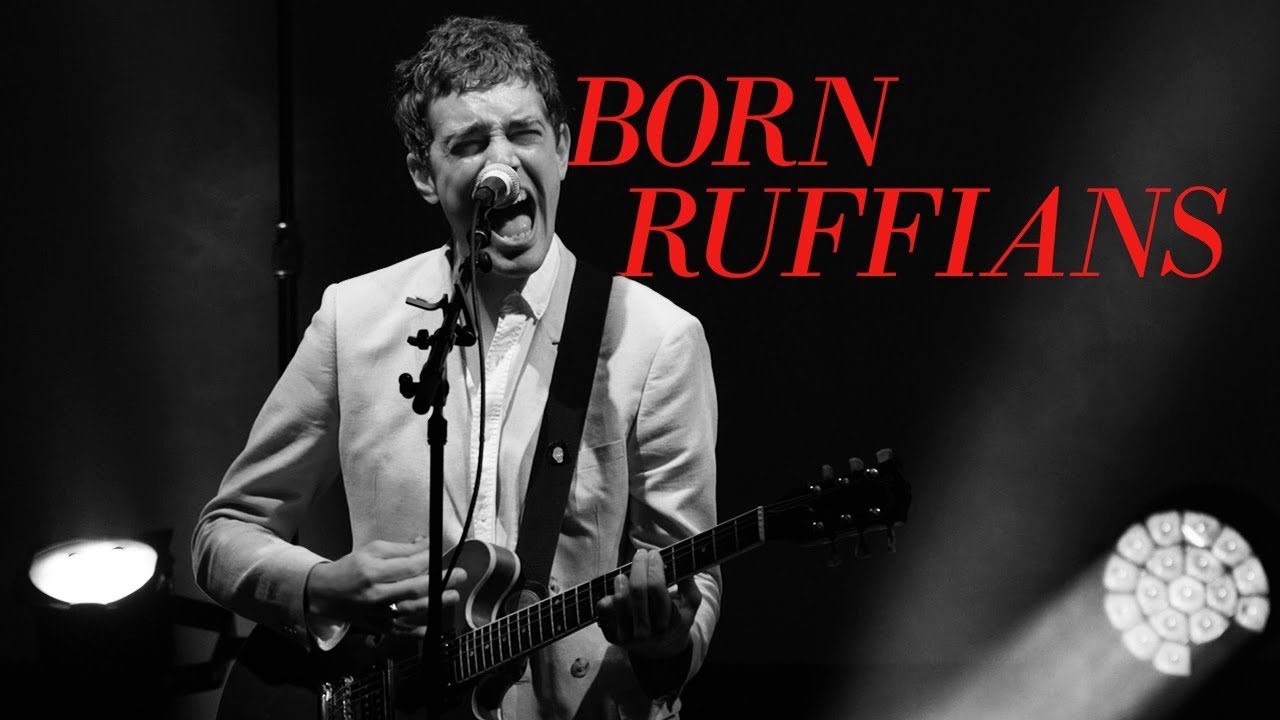
Born Ruffians | Live at Massey Hall - Oct 14, 2017

Born Ruffians - Needle

Born Ruffians - Forget Me (Official Video)
